
Ring Ouzel Diet and Size: Feeding Habits, Predators, and Measurements
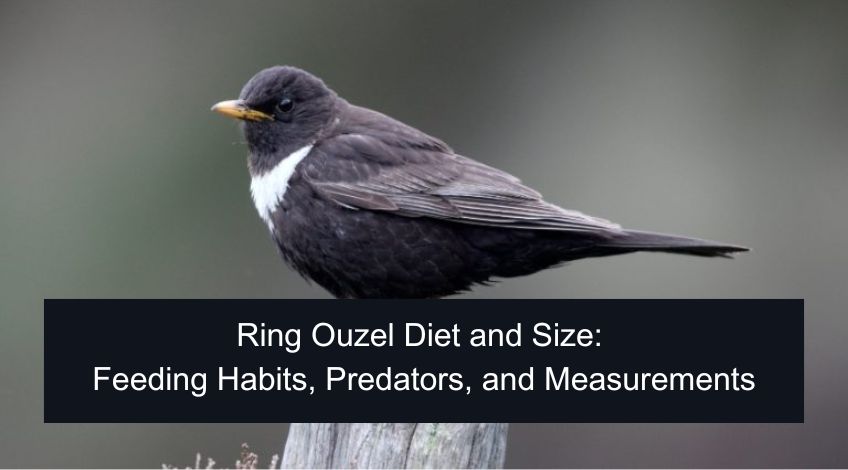
Ring Ouzels are summer visitors to the UK where they breed in upland and mountainous regions. They are similar in size to Blackbirds and males are easily recognisable by their black feathers, pale wing panels and striking white crescent shaped breast band.
They are capable of flying long distances during migration and can fly from the UK all the way to Africa where they overwinter. In this article we’ll take a close look at the dietary habits, breeding habits, appearance and much more besides about these fascinating members of the Thrush family.
Table of Contents
The Dietary Habits Of The Ring Ouzel
The Ring Ouzel has a varied diet that changes with the seasons, reflecting the availability of different food sources.
What Does A Ring Ouzel Eat?
During the breeding season (spring and summer) their diet primarily consists of insects and other invertebrates. They feed on beetles, caterpillars, earthworms, spiders, and ants. These protein-rich foods are essential for their energy needs and for feeding their chicks.
While insects are the main component, they also consume some berries and fruits if available, particularly in late summer.
In the autumn, as they prepare for migration, Ring Ouzels shift to a diet rich in berries and fruits. They consume rowan berries, hawthorn, juniper, and other soft fruits, which are high in sugars and help build up fat reserves for their journey.
Even during migration and in their wintering grounds, they may still eat some invertebrates, although berries are more prominent in their diet. They continue to feed on berries to build up fat reserves for their journey to southern Europe and North Africa.
What To Feed A Baby Ring Ouzel?
When feeding their chicks, Ring Ouzels primarily provide soft-bodied invertebrates, such as earthworms and caterpillars. These are easier for the chicks to digest and provide the necessary protein for growth.

The parents make frequent trips to collect food for the chicks, ensuring they receive adequate nutrition during the critical first weeks of life.
Breeding Habits Of Ring Ouzels
During the breeding season, male Ring Ouzels are known for their distinctive, melodious song, which they use to establish territory and attract a mate. They often sing from elevated perches such as rocks, trees, or bushes within their territory.
The song is a repetitive series of fluted phrases, often described as more melancholic compared to the song of the common blackbird. Males may also engage in a quieter, more subdued song when close to a potential mate.
Males sometimes perform flight displays to court females, involving slow, deliberate wingbeats and gliding. These displays are often accompanied by singing or calling. The male may also chase the female in a low, fast flight, often accompanied by calling, as part of the courtship process.
The male will establish a breeding territory and will aggressively defend it from other males. They chase any intruders away whilst singing loudly and in some cases these encounters can become physical.
Do Ring Ouzels Mate For Life?
No, Ring Ouzels do not mate for life. Once a pair bond has been formed, they remain monogamous for the entirety of that breeding season. The pair will typically split up as they migrate to their wintering grounds.
The following year, the pair will form a new season-long bond and raise another 1 or 2 broods.
The Size & Weight Of Ring Ouzels

Ring Ouzels are similar in size to Blackbirds but are easily identified by the white crescent on the breast of the male and the white edging to their feathers which gives the impression of scales.
How Much Does A Ring Ouzel Weigh?
The weight of an adult Ring Ouzel varies between 95 to 130 grams. Males and females are roughly the same size with only marginal differences between the sexes.
How Big Is A Ring Ouzel?
An adult Ring Ouzel has an overall length of around 23 to 24 cm and a wingspan of around 38 to 42 cm. Although similar in size to Blackbirds, Ring Ouzels are slightly smaller and have shorter tails.
Are Ring Ouzels Under Threat?
Ring Ouzels are under threat primarily due to habitat loss and other environmental pressures. Their populations have been declining in several parts of their range.
There are an estimated 6,200 to 7,500 breeding pairs of Ring Ouzels that visit the UK each year. Sadly, the population is decreasing and in Britain they are classified as a Red listed species due to a 43% decline in population over the past 40 years.
The main threats to the Ring Ouzel population include; habitat loss due to agricultural expansion, afforestation and climate change. They also face the threat of human disturbance from human recreational activities in their upland breeding areas as well as the building of roads and wind farms which fragment their habitats.
They also face similar problems to other birds which include the over use of pesticides and pollution from acid rain and other pollutants which degrade their habitats and reduce food availability.
What Eats A Ring Ouzel?
Ring Ouzels also face the threat of predation from a wide range of creatures. Birds of prey like Sparrowhawks and Peregrine Falcons prey on adults and fledglings. Crows and Ravens also prey on eggs and chicks if they discover a nesting site.
Mammals such as foxes, stoats, weasels and rats will also target nests and prey on eggs and chicks.
Where Can I See Ring Ouzels In The UK?
Ring Ouzels can be seen in various upland and mountainous regions across the UK, particularly during the breeding season in spring and early summer. Some of the most reported sightings occur in the following places;
Scotland
- The Cairngorms National Park
- Glencoe
- The Isle of Skye
Northern England
- The Peak District National Park (particularly around Kinder Scout and Stanage edge)
- The Lake District National Park (Particularly around Helvellyn and Scafell Pike)
- The North Pennines
South-West England
- Dartmoor National Park
- Exmoor
Wales
- The Brecon Beacons National Park
- Snowdonia National Park
Northern Ireland
- The Mourne Mountains (County Down)
The best chance of spotting Ring Ouzels is in spring or summer in one of the above locations. However, they can also be spotted in low lying areas during September and October as they make their way to their wintering grounds in southern Europe and north Africa.
SEE ALSO: Bar-Tailed Godwit Diet and Size: Feeding Habits, Predators, and Measurements
Frequently Asked Questions
A Ring Ouzel is a medium-sized thrush with blackish plumage, a distinctive white crescent-shaped band across its chest, and pale-edged wing feathers. Males are darker than females.
Ring Ouzels eat a variety of insects, worms, and other invertebrates during the breeding season. In autumn and winter, they mainly eat berries and fruits.
Yes, Ring Ouzels are under threat due to habitat loss, climate change, and human disturbance. Their populations have been declining, particularly in the UK.
Ring Ouzels typically live in upland and mountainous regions, such as moorlands, heaths, and rocky slopes.


